Probiotics: What They Are, What They Do and Which Are the Best
Complete guide to probiotics: proven benefits, difference from prebiotics, how to choose the best supplement and which foods naturally contain them.

Probiotics: What They Are and What They Do
The World Health Organization (WHO) defines probiotics as "live microorganisms that, when administered in adequate amounts, confer a health benefit on the host." In short: bacteria (and sometimes yeasts) that, when consumed in sufficient quantity, do something good for your body.
The probiotic market has exploded. In Spain alone, annual sales exceed €200 million. But the reality is that most probiotics sold don't work the same way for everyone — and many consumers buy them without knowing which strain they need or whether it's right for their situation.
How probiotics work
- Competition for adhesion: they occupy binding sites on the intestinal mucosa, physically blocking pathogenic bacteria.
- Antimicrobial substances: bacteriocins, hydrogen peroxide, and organic acids that inhibit pathogen growth.
- Immune modulation: stimulate secretory IgA production, modulate dendritic cells, and regulate Th1/Th2/Treg balance.
- Intestinal barrier strengthening: increase expression of tight junction proteins (claudins, occludin) that seal the intestinal lining.
- Metabolite production: some probiotics produce short-chain fatty acids, vitamins, and neurotransmitters.
- Gut-brain axis communication: influence serotonin and GABA production, with effects on mood and stress.
Proven probiotic benefits
High evidence (multiple controlled clinical trials):
- Reduction of antibiotic-associated diarrhea (especially Lactobacillus rhamnosus GG and Saccharomyces boulardii)
- Prevention and treatment of Clostridium difficile diarrhea
- Reduction of IBS symptoms
- Improvement of lactose intolerance (Lactobacillus acidophilus, Bifidobacterium longum)
- Reduced duration of respiratory infections
- Improvement of atopic dermatitis in children
Moderate evidence:
- Symptom improvement in inflammatory bowel disease (ulcerative colitis)
- Reduction of inflammation markers
- Mood improvement and anxiety reduction (psychobiotics)
- Weight loss support (Lactobacillus gasseri)
- LDL cholesterol reduction
Best probiotics: a strain-by-strain guide
This is the critical point most guides miss: probiotic benefits are strain-specific. Lactobacillus acidophilus NCFM is not the same as Lactobacillus acidophilus La5 — same genus and species, but different properties.
- Lactobacillus rhamnosus GG (LGG): the world's most studied probiotic. Reduces antibiotic diarrhea, improves IBS, strengthens the intestinal barrier.
- Bifidobacterium longum BB536: reduces allergic symptoms, improves constipation, and boosts immunity.
- Lactobacillus acidophilus NCFM: improves lactose digestion and reduces abdominal bloating.
- Bifidobacterium infantis 35624: particularly effective for IBS; reduces abdominal pain, gas, and distension.
- Saccharomyces boulardii CNCM I-745: probiotic yeast; highly effective for traveler's diarrhea and antibiotic-associated diarrhea. Antibiotic-resistant, so it can be taken simultaneously.
- Lactobacillus plantarum 299v: effective for diarrhea-predominant IBS; reduces gas and abdominal pain.
- Akkermansia muciniphila: the rising star of the microbiome. Strengthens the intestinal barrier and shows promising metabolic effects (weight, blood sugar). Now available as a pasteurized supplement.
How to choose a good probiotic
- Identified strains: the label must specify the full strain name (genus + species + strain code), not just "Lactobacillus spp."
- CFU per dose: most studies use 1-10 billion CFU (10⁹-10¹⁰). More isn't always better; it depends on the strain and condition.
- Guaranteed viability: bacteria must be alive at the point of consumption, not just at the time of manufacture. Look for guaranteed viability until the expiry date.
- Gastric protection: enteric-coated capsules or microencapsulation technology protect bacteria from gastric acid.
- Compatibility with your microbiota: the ideal probiotic depends on your current microbiota composition.
Natural probiotics: the best food sources
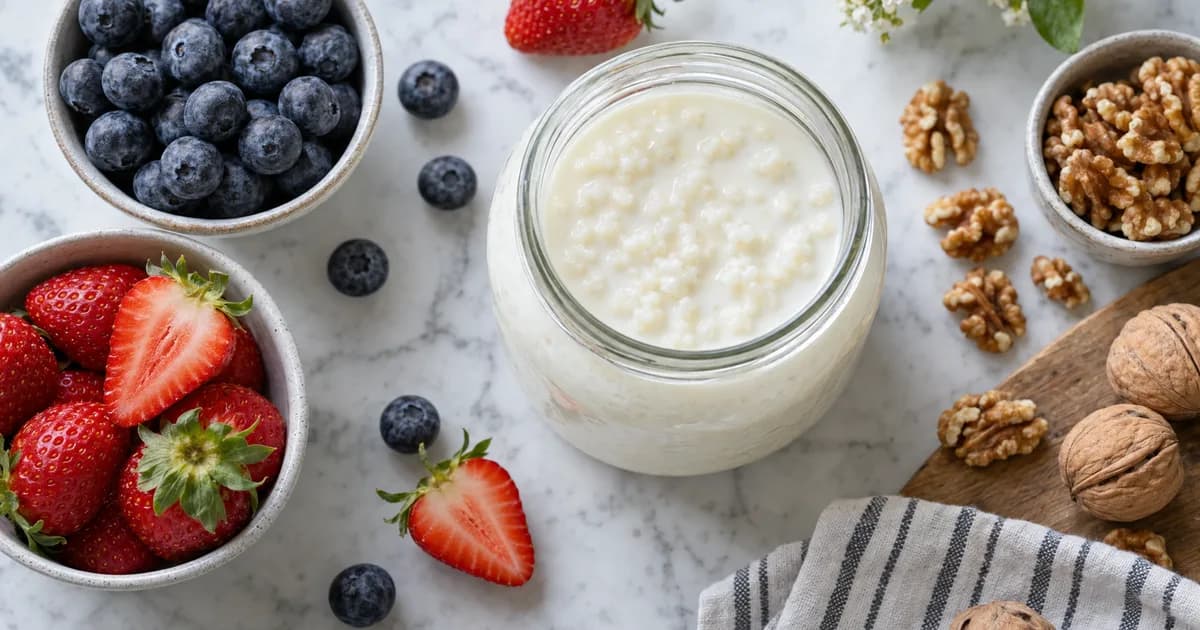
- Kefir: king of probiotic foods. Up to 60 different bacterial and yeast strains. Can be made at home.
- Natural yogurt: always with "live Lactobacillus bulgaricus and Streptococcus thermophilus" on the label. Avoid those pasteurized after fermentation.
- Unpasteurized sauerkraut: rich in Lactobacillus plantarum. Only the refrigerated kind, not shelf-stable jars.
- Kimchi: Korean version with various fermented vegetables and spices. Rich in Lactobacillus kimchii.
- Miso: Japanese fermented soybean paste. Source of Aspergillus oryzae and lactic acid bacteria. Add at the end of cooking — heat destroys bacteria.
- Tempeh: fermented pressed soy. Besides probiotics, an excellent plant protein source.
- Kombucha: fermented tea. Source of acetic acid, gluconic acid, and various bacterial strains.
When and how to take probiotics
- Timing: with breakfast or immediately before a main meal. Gastric pH rises with food, improving bacterial survival.
- With antibiotics: always separate by at least 2 hours. Exception: Saccharomyces boulardii can be taken at any time (it's a yeast, antibiotics don't affect it).
- Duration: minimum 4-8 weeks to see results. Probiotics don't permanently colonize; their effects last while you take them and a few weeks after.
The right probiotic depends on YOUR microbiota
If you already have a good population of Lactobacillus rhamnosus, taking more won't add anything. If your problem is a deficiency of Akkermansia muciniphila or Faecalibacterium prausnitzii, most commercial probiotics don't even contain them.
The VitalOme Test identifies exactly which bacteria you have, in what proportion, and where the imbalances that most need correcting are. Done from home, results in 2 weeks.
Order my VitalOme Test — €249Want to know the state of your gut microbiome?
Analyse your gut microbiome at home with VitalOme
Over 5,000 bacterial species analysed. Results in the app in 2 weeks. Free shipping in Spain.
Order my VitalOme kit — €249