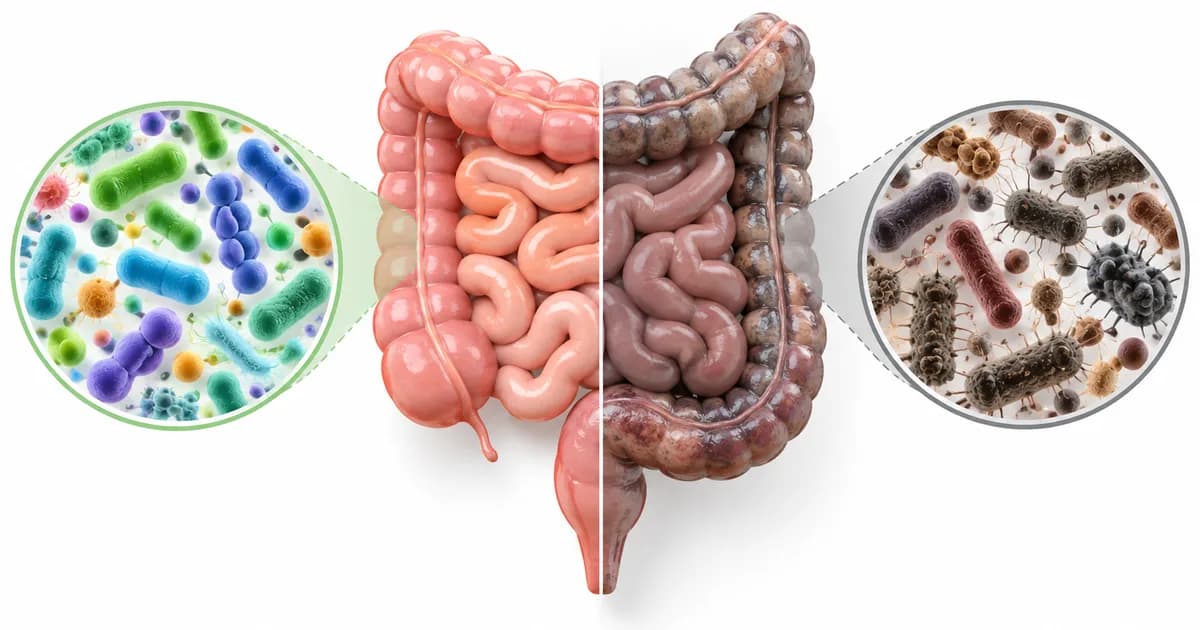
Kefir: Benefits for Your Gut Microbiota and How to Take It Correctly
Kefir is one of the fermented foods with the most scientific evidence. Discover what bacteria it contains, how it benefits your microbiota, and how much to take for real results.

What Is Kefir?
Kefir is a fermented drink obtained by adding kefir grains — a symbiotic community of bacteria and yeasts — to milk or sweetened water. While a standard yogurt contains 2-3 bacterial strains, a quality kefir can contain more than 30 different strains, with concentrations of up to 10 billion CFU per milliliter.
Types of Kefir
Milk kefir
The most studied. Contains lactic acid bacteria (Lactobacillus kefiranofaciens, Lactobacillus kefiri, Leuconostoc) and yeasts like Saccharomyces cerevisiae. Its lactose content is 70-80% lower than the original milk, making it tolerable for many people with mild intolerance.
Water kefir
A vegan alternative dominated by Lactobacillus hilgardii and Bifidobacterium. Valid for people who don't consume dairy.
Commercial vs. artisanal kefir?
Pasteurized commercial kefir has been heated after fermentation, drastically reducing live microorganisms. For real benefits, look for unpasteurized kefir or products guaranteeing minimum CFU at the consumption date.
Kefir Benefits for Gut Microbiota
1. Increases microbial diversity
A Stanford University study (2021, Cell) demonstrated that daily consumption of fermented foods like kefir for 10 weeks significantly increased microbial diversity, outperforming a high-fiber diet.
2. Reduces inflammatory markers
The same Stanford study showed participants reduced 19 inflammatory markers, including proteins associated with chronic inflammatory diseases.
3. Strengthens the intestinal barrier
Kefiran stimulates mucin production, the protein that forms the protective mantle of the intestinal epithelium, preventing "leaky gut."
4. Natural antibacterial activity
Kefir bacteria produce lactic acid, bacteriocins, and hydrogen peroxide that inhibit the growth of Salmonella, Helicobacter pylori, pathogenic E. coli, and Listeria.
5. Benefits in IBS
A 2020 review in Nutrients found significant improvements in stool frequency, consistency, and digestive quality of life scores in IBS patients.
How to Take Kefir to Maximize Its Benefits
How much? Most studies use between 200-400 ml per day (1-2 glasses).
When? Many experts recommend taking it on an empty stomach or 30 minutes before meals. Taking it with meals is also effective and better tolerated.
How long until results? First microbiota changes are detectable in 1-2 weeks. Deeper benefits appear after 4-10 weeks.
Initial adaptation: A 3-7 day adaptation period with some gas or bowel changes is normal. Start with 100 ml/day and increase gradually.
Kefir vs. Probiotic Capsules
| Factor | Kefir | Probiotic capsules |
|---|---|---|
| Strain diversity | High (>30 strains) | Low (1-10 strains) |
| Scientific evidence | High (traditional food) | Variable (strain-dependent) |
| Cost | Low (~€1/day) | Variable (€2-5/day) |
| Personalization | No (fixed microbial community) | High (choose specific strains) |
| Other nutrients | Yes (calcium, B12, protein) | No |
Does kefir benefit you? It depends on your microbiota
The Stanford study showed that the effect on microbial diversity varies considerably between individuals. The VitalOme Test analyzes your microbiota before starting any intervention and tells you exactly which strains you need to boost.
Order my VitalOme Test — €249FAQ
Does kefir help with intestinal candidiasis?
Kefir contains Saccharomyces cerevisiae, a different species that doesn't worsen candidiasis. Some kefir bacteria produce antifungal compounds. In severe candidiasis, consult a specialist first.
Does kefir contain lactose?
Milk kefir has up to 80% less lactose than original milk. People with severe intolerance can opt for water kefir or coconut milk kefir.
Can kefir be made at home?
Yes. Add kefir grains to whole milk, ferment 24-48 hours at room temperature, and strain. The grains are reused indefinitely.
Want to know the state of your gut microbiome?
Analyse your gut microbiome at home with VitalOme
Over 5,000 bacterial species analysed. Results in the app in 2 weeks. Free shipping in Spain.
Order my VitalOme kit — €249