Gut-Brain Axis: How Your Microbiota Affects Your Mental Health
The gut-brain axis connects your microbiota to your mood, anxiety, and cognition. Discover the science behind this connection and what you can do about it.
Your Gut, Your Second Brain
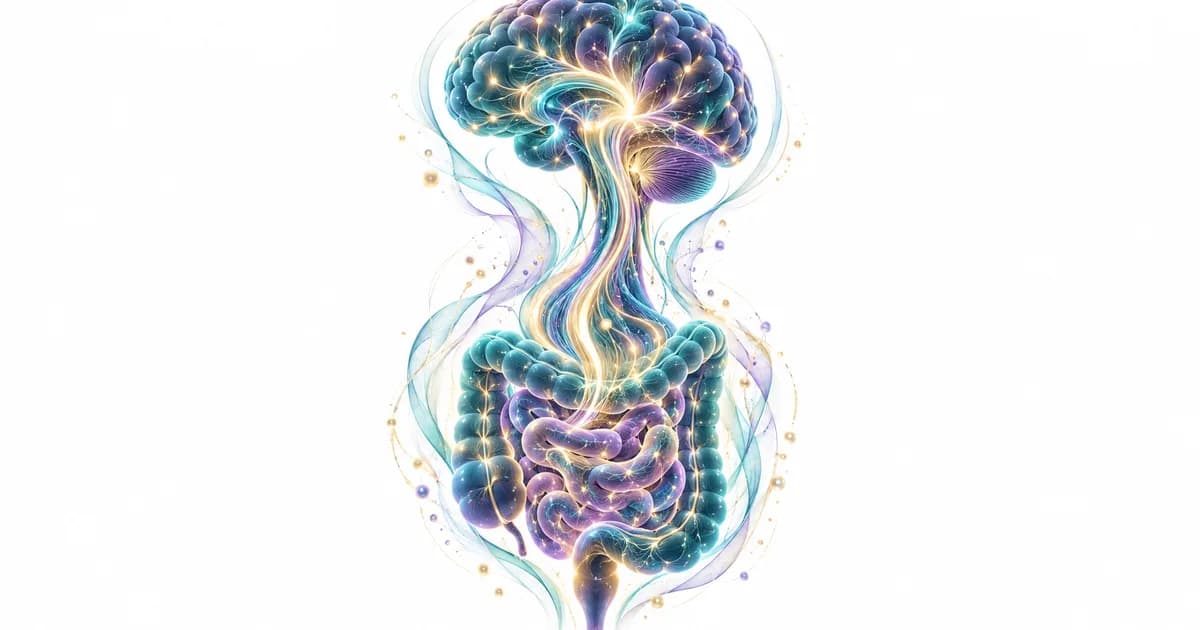
The enteric nervous system — the gut's neural network — contains more than 500 million neurons, more than the spinal cord. This isn't a metaphor: your gut has its own nervous system capable of functioning independently of the brain.
But both are in constant communication. The gut-brain axis is the bidirectional signaling network connecting the central nervous system with the enteric system through the vagus nerve, the immune system, the endocrine system, and bacterial metabolites.
And at the center of this entire system: the gut microbiota.
How the Microbiota Influences the Brain
Neurotransmitter Production
Gut bacteria produce or regulate the synthesis of:
- Serotonin: 90-95% of the body's serotonin is produced in the gut. Bacteria stimulate enterochromaffin cells in the colon to produce it
- GABA: the main inhibitory neurotransmitter; bacteria from the Lactobacillus and Bifidobacterium genera stimulate its production
- Dopamine: precursors produced in the gut affect brain levels
- Norepinephrine: some bacteria produce precursors that influence alertness
Communication via the Vagus Nerve
The vagus nerve is the main highway of the gut-brain axis. 80-90% of vagal fibers are afferent (from gut to brain, not the reverse). Gut bacteria send signals to the brain through this route, influencing mood, stress response, and eating behavior.
Regulation of the HPA Axis (Stress)
The microbiota regulates the hypothalamic-pituitary-adrenal (HPA) axis, the stress response system. An imbalanced microbiota can keep this axis hyperactivated, resulting in chronically elevated cortisol levels, anxiety, and difficulty relaxing.
Low-Grade Inflammation
Dysbiosis increases intestinal permeability, allowing bacterial lipopolysaccharides (LPS) to enter the bloodstream. LPS activates the immune system and produces low-grade systemic inflammation associated with depression, fatigue, and brain fog.
Microbiota and Mental Health: What Science Says
Depression
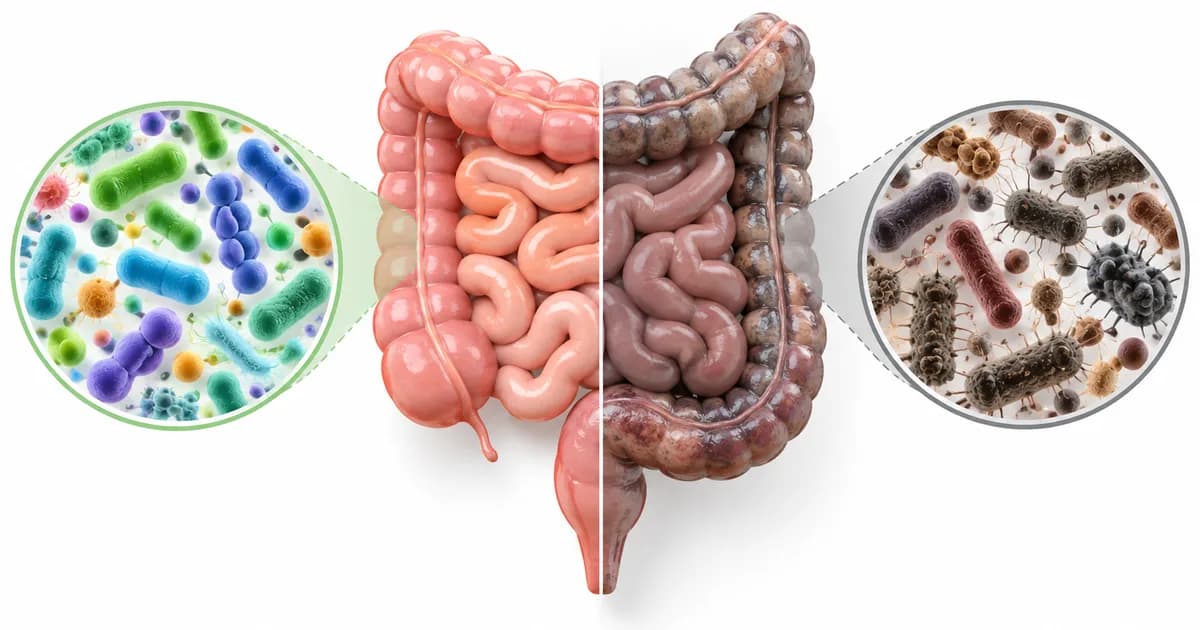
Multiple studies show that depressed patients have a significantly different microbiota than healthy individuals. In particular:
- Reduction of Lactobacillus and Bifidobacterium
- Increase of pro-inflammatory bacteria
- Lower levels of butyrate (anti-inflammatory)
A 2019 clinical trial (Jacka et al.) showed that a dietary intervention improving the microbiota significantly reduces depressive symptoms.
Anxiety
Animal and human studies show that the microbiota regulates fear and anxiety responses. Transfer of microbiota from anxious mice to germ-free mice transmits anxious behaviors.
Autism (ASD)
Children with ASD more frequently present an altered microbiota. The causal relationship is debated, but fecal microbiota transplant trials in ASD are ongoing with promising preliminary results.
Alzheimer's and Cognitive Decline
Dysbiosis is associated with greater beta-amyloid production and neuroinflammation, key factors in Alzheimer's. Emerging research, not conclusive, but very active.
Psychobiotics: Probiotics for the Mind
The term psychobiotic (Dinan and Cryan, 2013) designates microorganisms that, consumed in adequate amounts, produce mental health benefits.
Strains with Evidence in Anxiety/Depression
- Lactobacillus rhamnosus JB-1 — reduces anxiety and cortisol levels (human and animal studies)
- Bifidobacterium longum NCC3001 — improves quality of life in IBS and reduces anxiety
- Lactobacillus helveticus R0052 + Bifidobacterium longum R0175 — reduces psychological stress in healthy adults (Messaoudi et al., 2011)
What the Modern Microbiota Gets Wrong
The contemporary Western microbiota is under constant attack:
- Low-fiber diet: deprives protective bacteria of their food
- Ultra-processed foods: emulsifiers and preservatives alter bacterial composition
- Antibiotics: each course reduces microbial diversity for months
- Chronic stress: cortisol modifies the microbiota and the microbiota modifies cortisol — a vicious cycle
- Sedentary lifestyle: regular exercise increases microbial diversity
What You Can Do to Improve Your Gut-Brain Axis
1. Pro-Microbiota Diet
- 30+ different plants per week (diverse fiber = diverse microbiota)
- Fermented foods: kefir, yogurt, sauerkraut, kimchi
- Omega-3 (fatty fish, walnuts, chia): anti-inflammatory and neuroprotective
- Polyphenols (cacao, berries, olive oil): natural prebiotics
2. Stress Management
Stress alters the microbiota and the microbiota affects stress. Break the cycle with validated techniques: meditation, diaphragmatic breathing, aerobic exercise.
3. Quality Sleep
The microbiota follows circadian rhythms. Sleep deprivation alters its composition within 48 hours. 7-9 hours is non-negotiable.
4. Regular Exercise
Moderate aerobic exercise increases microbial diversity and butyrate production. 150 minutes per week is the minimum goal.
5. Analyze Your Microbiota
Without knowing what you have, changes are trial and error. Microbiota analysis identifies exactly which bacteria are missing, which are in excess, and which produce the metabolites your brain needs.
The VitalOme test gives you a complete map of your gut microbiota so you can make data-based decisions, not intuition.
Frequently Asked Questions
Can the microbiota cause depression?
Evidence shows a strong association between dysbiosis and depression, and there are plausible causal mechanisms. But depression is multifactorial; the microbiota is one of the factors, not the only one.
Do probiotics help with anxiety?
Psychobiotics (specific strains) show modest but real effects on low-to-moderate anxiety in clinical trials. They don't replace psychological or pharmacological treatment for severe anxiety.
How long does it take to notice improvement when changing diet?
Microbiota changes are detectable in 2-4 weeks with dietary intervention. Effects on mood and cognition usually appear in 4-8 weeks, with important individual variability.
Want to know the state of your gut microbiome?
Analyse your gut microbiome at home with VitalOme
Over 5,000 bacterial species analysed. Results in the app in 2 weeks. Free shipping in Spain.
Order my VitalOme kit — €249