


Chronic fatigue and microbiota: what your gut bacteria have to do with your energy

You wake up tired even after 8 hours of sleep. By mid-afternoon, you need caffeine to function. You rest on weekends but Monday brings the same state back. If this sounds familiar, you're not alone — and the cause might be closer than you think: your gut.
In recent years, scientific research has established a clear connection between the composition of gut microbiota and energy levels. What happens in your gut directly affects how you produce energy, how you sleep, and how your brain functions throughout the day.
What is chronic fatigue and why is it so hard to diagnose?
Chronic fatigue — also called Chronic Fatigue Syndrome (CFS) or myalgic encephalomyelitis — is persistent tiredness that doesn't improve with rest and significantly limits daily life. It's not the normal tiredness of a long day: it's fatigue that sets in for weeks or months with no obvious medical cause.
It's estimated to affect 0.4-1% of the population, but many more — millions — suffer from persistent fatigue without a formal diagnosis. The most common symptoms are:
- Extreme tiredness that doesn't improve with rest
- Brain fog (difficulty concentrating or remembering)
- Non-restorative sleep
- Muscle or joint pain without apparent cause
- Slow or heavy digestion
- Frequent mood changes
The problem is that conventional medicine looks for causes in the cardiovascular system, thyroid, or metabolism — and when everything comes back normal, the fatigue goes unexplained. What few doctors routinely evaluate is gut microbiota.
The connection between the gut and energy
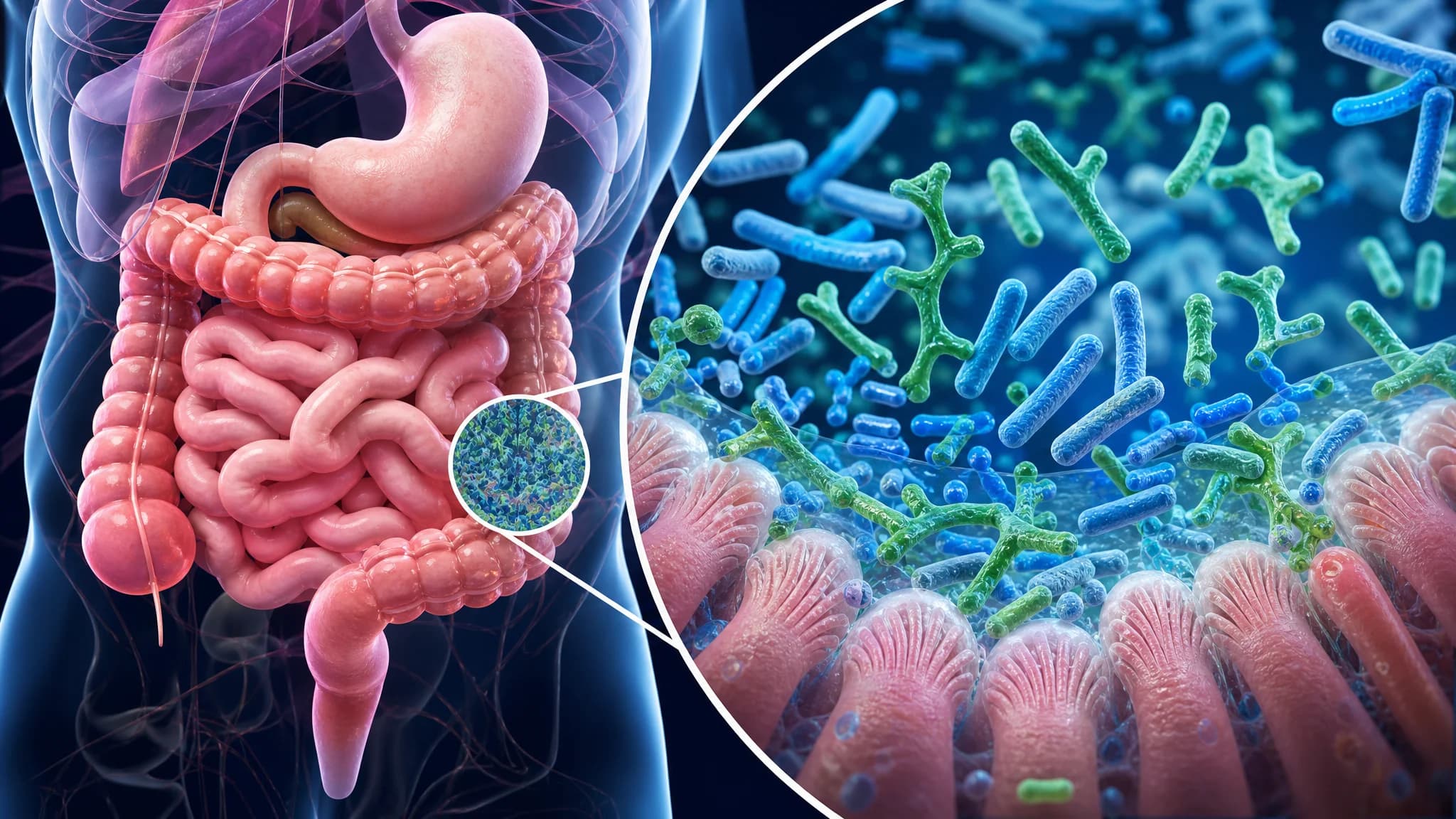
The gut isn't just a digestive tube. It's home to 38 trillion bacteria that perform essential functions for your energy:
1. Production of B vitamins
Gut bacteria synthesize vitamins B1, B2, B3, B6, B9, and B12. These vitamins are essential cofactors in ATP production — the cellular energy molecule. An impoverished microbiota produces fewer of these vitamins, which directly translates to less available energy for your cells.
2. Fiber fermentation into short-chain fatty acids
When your microbiota is diverse and well-fed, it ferments the fiber you eat and produces short-chain fatty acids (SCFAs) like butyrate, propionate, and acetate. These compounds feed intestinal cells, modulate inflammation, and act as an energy source for the body. Dysbiosis reduces this production, creating a silent energy deficit.
3. Regulation of the gut-brain axis
The gut produces more than 90% of the body's serotonin — the neurotransmitter that regulates mood, sleep, and the perception of energy. It also produces GABA and dopamine. An imbalanced microbiota disrupts this production, leading to non-restorative sleep, brain fog, and low motivation — core symptoms of chronic fatigue.
4. Control of systemic inflammation
Dysbiosis increases intestinal permeability — the phenomenon known as "leaky gut." This allows bacterial fragments (like LPS, lipopolysaccharide) to enter the bloodstream, activating a chronic low-grade inflammatory response. This silent inflammation consumes the body's energy resources and produces persistent fatigue, pain, and brain fog.
Could your fatigue have its origin in your microbiota?
VitalOme analyses the gut-brain axis and energy metabolism among its 17 health areas.
Discover VitalOmeWhat the science says: microbiota and chronic fatigue
The evidence is increasingly compelling:
A study published in Cell Host & Microbe (2023) analyzed the microbiota of chronic fatigue syndrome patients and found specific, consistent patterns of dysbiosis: reduced abundance of Faecalibacterium prausnitzii (a key anti-inflammatory bacterium) and increased presence of pro-inflammatory bacteria.
Researchers at Cornell University identified significant differences in the microbial composition of CFS patients compared to healthy individuals, with a marked reduction in bacterial diversity and alterations in bile acid metabolism.
A 2024 meta-analysis published in Gut Microbes concluded that microbiota intervention — through specific diet, probiotics, and prebiotics — significantly reduces fatigue symptoms in CFS patients.
Microbiota patterns most associated with fatigue
Not all dysbiosis produces fatigue in the same way. The patterns most frequently related to chronic tiredness are:
- Deficit of butyrate-producing bacteria: Faecalibacterium prausnitzii, Roseburia intestinalis, and Eubacterium rectale are the main butyrate producers. Their reduction is directly associated with fatigue and inflammation.
- Excess of pro-inflammatory bacteria: An increase of Enterobacteriaceae or Clostridium perfringens raises LPS levels and activates the inflammatory response.
- Altered tryptophan metabolism: Some bacteria convert tryptophan into serotonin. When these bacteria are scarce, serotonin production decreases — directly affecting sleep and energy.
- Low general diversity: Microbial diversity is one of the most robust markers of gut health. A low-diversity microbiota has reduced functional capacity across all fronts — including energy production.
Fatigue, gut, and sleep: the vicious cycle
The relationship between microbiota, fatigue, and sleep is bidirectional and creates a vicious cycle:
Dysbiosis reduces serotonin and melatonin production → sleep becomes less restorative → sleep deprivation worsens dysbiosis → dysbiosis increases inflammation → inflammation produces more fatigue → fatigue makes exercise difficult → sedentarism further impoverishes the microbiota.
Breaking this cycle requires acting on the microbiota directly — not just on sleep or fatigue separately.

How to know if your microbiota is behind your fatigue
The only way to know for certain is to analyze it. GenBiome's VitalOme test identifies through high-precision NGS sequencing:
- Levels of butyrate-producing and other SCFA-producing bacteria
- Degree of microbial diversity
- Presence of pro-inflammatory bacteria
- The tryptophan metabolism profile and other energy-related pathways
- Specific imbalances with personalized dietary recommendations
Instead of continuing to try generic supplements or diets that aren't designed for your specific microbiota, you get an exact map of what's happening in your gut — and an action plan based on your own bacteria.
Is your microbiota affecting your energy?
The VitalOme test analyzes your gut microbiota through NGS sequencing and gives you personalized recommendations to restore your energy from the root cause.
Discover how the VitalOme test works →If you don't yet know the differences between the microbiota tests available in Spain, you can check out our updated comparison.
5 changes that improve microbiota and can reduce fatigue
While you wait or complement the analysis, these changes have solid evidence to improve both your microbiota and your energy levels:
- 1Eat more diverse fiber — Each type of fiber feeds different bacteria. Include leafy greens, legumes, oats, apples, and onions. The goal is 30 different plants per week.
- 2Add fermented foods — Kefir, natural yogurt, sauerkraut, and kimchi provide live bacteria that increase microbial diversity. A Stanford study (2021) showed daily fermented food consumption increases bacterial diversity in 8 weeks.
- 3Reduce sugar and ultra-processed foods — These feed pro-inflammatory bacteria and reduce diversity. They're the main enemy of a healthy microbiota.
- 4Maintain your circadian rhythm — Going to bed and waking up at the same time stabilizes the gut-brain axis. The microbiota has its own circadian rhythm and desynchronizes with irregular schedules.
- 5Exercise moderately and regularly — 30 minutes of walking or cycling per day increases microbial diversity and SCFA production. You don't need to train intensely — consistency is what matters.
When to see a doctor
Persistent fatigue can have medical causes that require attention: anemia, hypothyroidism, diabetes, sleep apnea, or depression, among others. See your doctor if:
- The fatigue has lasted more than 3 months with no clear cause
- It's accompanied by fever, weight loss, or intense pain
- It seriously interferes with your work or personal life
- It doesn't improve with any lifestyle changes
Microbiota analysis is complementary to medical evaluation, not a substitute.
Conclusion
Chronic fatigue rarely has a single cause — but gut microbiota is one of the most overlooked and most influential factors. If your gut isn't producing enough B vitamins, if silent inflammation is consuming your energy resources, if your sleep isn't restorative due to an intestinal serotonin deficit — no energy supplement will solve the root problem.
Knowing your microbiota is the first step to understanding what's limiting your energy and taking action based on real data about your own body.
Order your VitalOme test and start understanding your energy →Article reviewed by the GenBiome scientific team. Last updated: September 2026.
Want to know the state of your gut microbiome?
Analyse your gut microbiome at home with VitalOme
Over 5,000 bacterial species analysed. Results in the app in 2 weeks. Free shipping in Spain.
Order my VitalOme kit — €249